

- About Us
- Programs
- Offered Courses
- Forms
- News
- Others
- Contact
- Online Application
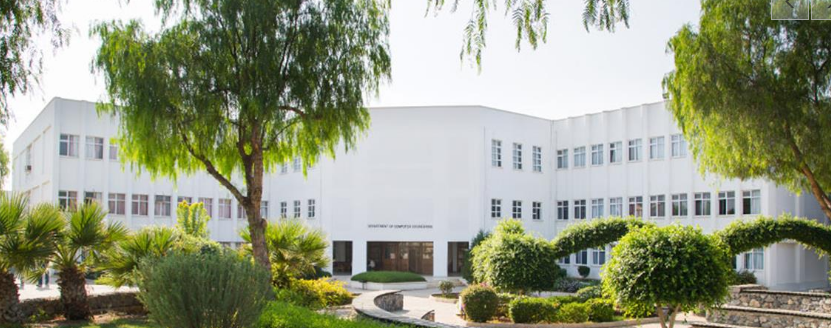
The Department of Computer Engineering at Eastern Mediterranean University was established in 1993 and first graduates graduated in 1997. The mission of the department is to train its students to be highly competent engineers in their field of specialization, have mastery of more than one language with good communication skills, be ready for team work and be able to meet the challenges of an ever changing work environment.
EMU Computer Engineering Department has full time staff consisting of 10 professors, 1 associate professor, 2 assistant professors, 2 distinguished professors, 2 senior faculty members and 20 research assistants. Supporting the educational activities in the department are a new state-of-the-art AI lab, 3 general-use computer laboratories, one senior year graduation project lab, 2 multimedia laboratories, 2 logic design laboratories, 1 microprocessor laboratory, 1 circuit and electronics laboratory, and 1 graduate level research and development laboratory.
The department currently has four undergraduate programs awarding the Bachelor of Science (B.Sc.) degree: Computer Engineering (in English), Software Engineering (in English), Artificial Intelligence Engineering (in English) and Computer Engineering (in Turkish). All undergraduate students take foundational Math and Science courses and introductory computing courses in their first year, followed in later years by advanced courses in Mathematics, specialized courses according to their program (Computer, Software or AI), several Arts and Humanities courses (including at least one ethics course and at least one business/finance related course), as well as English language courses. In each undergraduate program exists a two-semester capstone design project (also called "Graduation Project") course in the senior year where students work in teams of 4-5 people to tackle real life problems and produce solutions for those problems. Through this experience they perfect their skills in team work, communication, documentation and communication of the results since not only do they understand the problem, design, implement and test a solution for it, but they also produce structured documentation throughout all stages of the project and finally explain their project and defend their solution in front of a jury made up of both faculty members and representatives from industry. Each undergraduate curriculum also includes 4 technical elective courses in the senior year which allows the students to get a taste of more advanced and specialized topics in the computing field. Consequently all our undergraduate programs produce graduates who not only are technically highly competent in their area of specialization but also are well prepared for today's and tomorrow's workplace.
The aim of the M.Sc. level graduate programs in Software Engineering and Computer Engineering is to provide advanced instruction in their respective fields, improve analysis, synthesis and design abilities of students, improve their research competence as well as skills in both independent and collaborative work.
The Doctoral (PhD) program in Computer Engineering (established in 1998) aims to produce academicians and researchers who can conduct original research study in the computer engineering field, perform collaborative research, publish their work and serve as members of academic staff in universities or as researchers in research organizations.
All our programs are listed below.
| Program Name | Degree | Duration (Years) |
| Software Engineering | Bachelor / B.Sc. | 4 |
| Computer Engineering (Turkish) | Bachelor / B.Sc. | 4 |
| Computer Engineering | Bachelor / B.Sc. | 4 |
| Artificial Intellignece Engineering | Bachelor / B.Sc. | 4 |
| Computer Engineering (without Thesis) | Master / M.Sc. | 1 - 2 |
| Computer Engineering (with Thesis) | Master / M.Sc. | 1 - 2 |
| Software Engineering (with Thesis) | Master / M.Sc. | 1 - 2 |
| Computer Engineering | PhD / Ph.D. | 2 - 5 |
The department has proven its competence in Computer Engineering education with the ABET (Accreditation Board for Engineering and Technology) accreditation it received in 2009 for the first time. This accreditation was renewed in 2022 and is valid until 2028. The Software Engineering program received its first accreditation by ABET in 2016 and has been re-accredited in 2022, valid until 2028 as well. Currently it is the only accredited Software Engineering program in Turkey and TRNC. Since the AI program is relatively new we have not been able to apply for ABET accreditation for it, but will do so as soon as it qualifies for application. Our faculty members are very experienced and highly qualified educators who also perform state-of-the-art research in their areas of expertise. Our facilities are remarkable, featuring both state-of-the-art equipment and an impressive building dedicated to the Department of Computer Engineering.
The Computer Engineering Department has contributed to the economic development of the TRNC not only through the research projects carried out by its faculty, but also through its continuous production of well-qualified engineers in the computing field who have taken on research and development roles in the local technology sector. Furthermore, faculty members of the Computer Engineering Department were instrumental in the initiation and development of EMU’s online distance education initiatives and also took part in various European Union–funded projects.
Our students have obtained successful results in many project and programming competitions. A recent example to this is first position by two of our students (in a group of three) in the 2024 Teknofest “Flying Car Simulation” competition.
The department has graduated more than 2450 B.Sc. and more than 340 M.Sc. students. Some of these graduates are working in international companies in various countries. Most of our 62 PhD graduates are currently academic staff members at universities in various countries.
Our graduates have traditionally been employed as system administrators, application developers, software engineers, database administrators, and software designers. They are also involved in computer-aided industrial applications and serve as engineers in research and development projects. Furthermore, a considerable number of our graduates continue their education at the graduate level and later join universities as academic staff.

Department of Computer Engineering
99628, Famagusta, North Cyprus
via Mersin 10, Turkiye